
Data vis-à-vis Insight
November 4, 2025
Reading Between The Lines
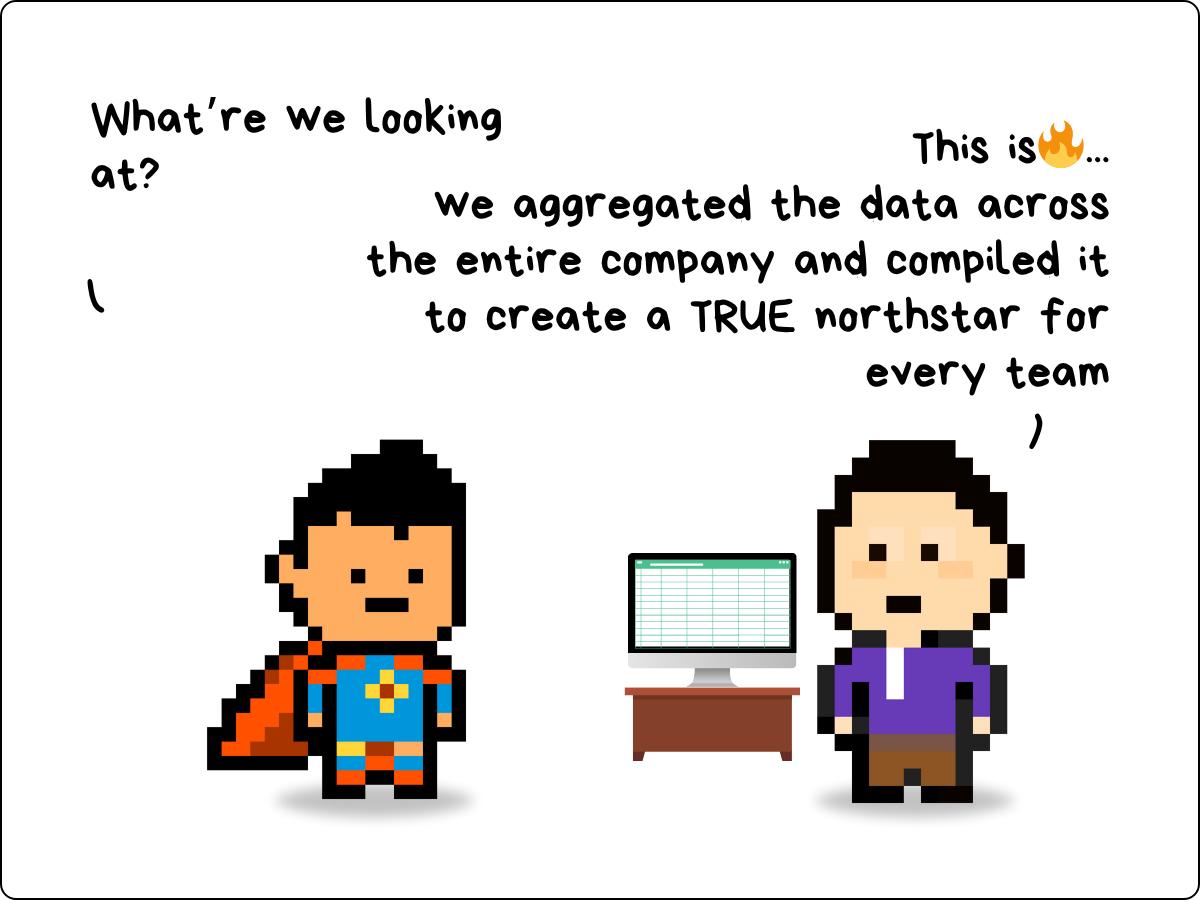
I have worked at 2 companies where the CEO declared that Big Data was going to be the future of the company. Both companies were DTC ecommerce, not tech or saas, or anything really dependent on data or this “big” data they were barking about.
Somewhere along the way, both of these CEOs got hyped up on this idea that data is the future of everything. There is a little truth to that, this is an information economy right now, but just because something is-the-future, doesn’t mean it is-the-future for every business.
Because we are all plugged into the same internet, we all hear the same business trends and want to join in on the fun.. but that also means business owners get that good ‘ol FOMO when they here success stories from someone online.
And that is never good.
Being the DTC Universe, our businesses are kind of the bottom of the totem pole. Even wildly successful DTC brands are still tiny when compared to the big retailers and manufacturers.
Our needs are not the same. Our position is not the same. Our budgets are not the same...
But at the same time, each decision we make is exponentially more impactful to the overall health and direction of our business.
So when the CEO of an online suit maker is shilling the idea that Big Data is the future, he should be pouring over the small amount of data that is actionable so he has enough money to buy more fabric, or hire more marketers or designers.
Less Is More
I’ve used most of the analytics tools out there. Some extensively, some just demoed. And the underlying theme is MORE.
Collect it all, aggregate it, dashboard it... why?
Because that is what sells. If you are an analytics platform, it is easy to sell a product that has it all, and has “everything in one dashboard” and “you know longer need to jump between tabs!”
That is an easier sell than honing in on just the data that will have an impact. If you made this arguement to the salespeople of some broad analytics tool, they would rightfully say, “but ours does that TOO!”
However, my point is that having all the TOOs in one dashboard creates white noise... or decision paralysis... or just plain confusion (not everyone thinks in numbers).
Maybe we should rethink the idea that silos are bad and that everything together is good?
I was building a dashboard last week that focused only on 1 type of page -- because I wanted to isolate some metrics around the PDPs on our site -- not because I wanted another thing to manage, but because I wanted some where to go to when I need to focus on that particular area of my work.
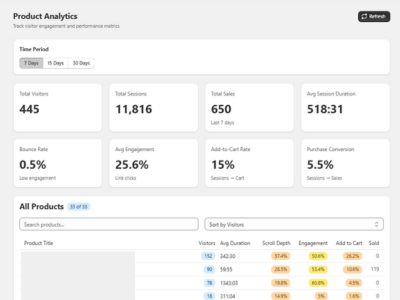
This doesn’t replace anything, but it puts what I need to in front of me without distractions.
I Didn’t Come Up With This Alone
Joe Federer, who was the Head of Brand Strategy at Reddit, wrote a great book called The Hidden Psychology of Social Networks (not affiliated but here is link), and in this book he talks about why it is wrong to post the same content across different social media networks.
What is good for Facebook won’t be great on LinkedIn
What kicks as on Instagram might be a dud on Twitter
What is acceptable on Reddit might not be the best thing for Youtube.
His point was that when we go on Reddit, we approach it with a completely different mindset than when we want to tweet something. Or when we want to share a story on IG, we are not thinking about business like when we log into LI.
And that makes a helluva lot of sense.. our brains compartmentalize everything when it can already. So if its going to do that when we open a social media app, wouldn’t it also do the same when we open a dashboard to view analytics.
Data vis-à-vis Insight
Data, as it relates to insight, is still raw unless we can parse it. And that raw data only becomes insights if we parse it in a way that helps us understand the task at hand.
I love diving into dashboards and anayltics tools as much as the next data nerd, but most of the larger tools that aggregate everyting are pretty much built for making reports, which is super valuable for larger business or enterprise operations.
But for us in the DTC trenches, the data we need is much smaller -- but much more poignant. And when we have that, we get a better perspective on what we need to allot time towards.
And the results are then easier to measure... because in the end, we still need to measure it so we can compare ourselves to others... we’re all human
Restack if you like it!
Originally sent as an email — view on Substack.
Get the next one by email
New issues go out as they are written. No schedule, no filler.