
Music, an industrial designer, and what they teach us about content...
September 7, 2022
The Greatest Song In The World
What is the most popular song in the history of the world?
On YouTube, that would be Baby Shark Dance.
On Spotify, that would be Shape Of You.
On Radio, that would be You’ve Lost That Lovin’ Feeling.
On tables at Oktoberfest, definitely Take Me Home, Country Roads.
All of these are endearing (though hopefully not all enduring). But even with billions of plays online, the most popular song is still not on that list.
You have heard it hundred (or thousands) of times, and sang it a bunch too. Since before you could remember. And it was written in 1868 in Germany.
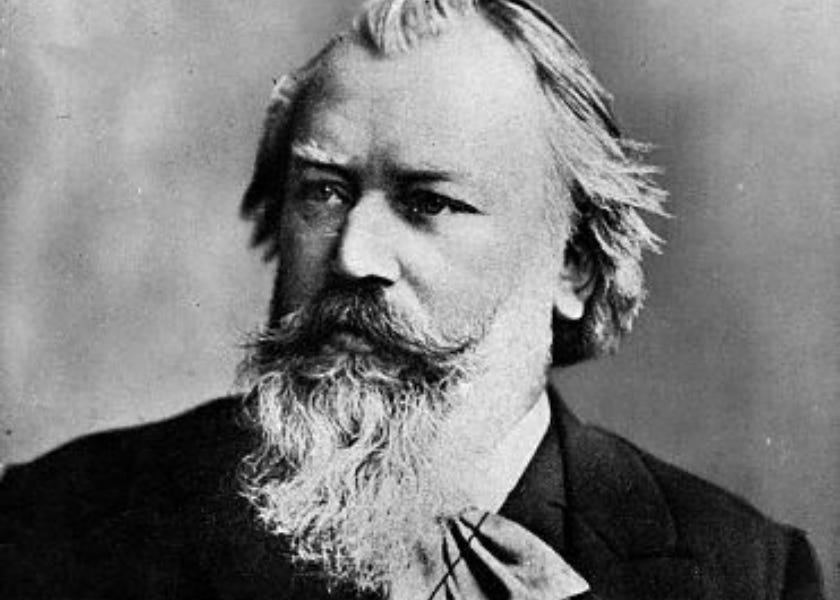
Johannes Brahms wrote a song for the newborn of a woman who he has once been in love with. It was a gift… to more than he realized.
It was the Lullaby.
Lullaby and good night
With roses bedight
With lilies o'er spread
Is baby's wee bed
Brahms did however pull a massive Vanilla Ice when he wrote this song.
The melody “sampled” an Austrian folk song often sung to children. But I am glad he did. Because if he didn’t stop, collaborate, and listen… we would have been deprived of the world’s most popular song.

It was popularized in Europe, but it made its way to the US with the Germans who immigrated during World War I. They brought the song with them. Which was passed down and translated, and quietly sung into our collective psyche.
-
I read about Brahms and his Lullaby in the book Hit Makers, where Derek Thompson explores what makes something a hit or popular.
He takes us through modern history in music, design, and culture to show us the mechanics that go into why things catch on…
Why Lullaby is the go-to go-to-sleep song…
How 4 chords rule the radio…
How a Frenchman changed America through design…
The concepts that I want to cover here are fascinating on their own, but they can applied to marketing and business.
And it might change how you see content.
-
Fluency
In psychology, fluency refers to the ease of processing information.
When we are presented with new information, we have to process it. We decide if we agree with it, if it needs more info, or if it is just trash.
We as humans, like water, tend to follow the path of least resistance. So if this new information is easy to process, we get it. We like it. We view it as valuable…regardless of merit.
On the flip side…
Have you ever read something and thought, “ugh, I don’t want to read this. It makes my brain hurt.”
That is disfluency. The information at hand is just not worth the mental gymnastics, and therefore, not as valuable or worthy of consideration.
This concept sheds a little light on why we swallow political talking points so readily. Why Lady Gaga is more popular than jazz. Why Baby Shark Dance is so infectious with kids.
Fluency is sort of an barrier to entry for new things. Sometimes we want reruns of The Office. Sometimes we want a philosophical debate.
But in a macro sense, things that are easy to process are processed… and inherit a sort of legitimacy.
Politicians know this well…. read my lips…
-
Familiarity
Familiarity has a big impact on fluency. When we come across information or an object that we’ve seen before, it takes no time process. No mental effort. And we love that stuff.
Thompson notes that “people like new things if it is just like old things.”
Music and movies are good examples :

A huge chunk of pop music’s most popular songs follow the same 4-chord progression. Famously called out by Axis of Awesome, they show you just how much these songs are structured the same. (it’s worth the watch the link)
It is the same in movies. We spend a ton more money at the box office on sequels and reboots than we do on original films.
The MCU is the most successful movie enterprise, and they are rehashing old comics is a never-ending mash-up.
And even though I don’t like Marvel movies, I am a huge Batman fan, and he has more lives than Catwoman.
Whether it is movie or music, we gravitate to things that we recognize. That are fluent. That are familiar.
People like new things if it is just like old things.
Derek Thompson
But we don’t ONLY and ALWAYS like what is familiar and fluent..
We are a complicated species.
-
MAYA Philosophy
One of the most important pioneers of industrial design is Raymond Loewy. Born in France, he made his way to New York City in the 1920s and made his mark on aesthetics and design thinking.
He knew what people liked. And that led him to contract for designing everything from trains, to Coca-Cola bottles, to La Creuset, to Lucky Strike.

He understood fluency. He understood familiarity. But he understood people more.
He understood that people are complex and want to be challenged. That they want things that are new… up to a point.
To sell something surprising, make it familiar; and to sell something familiar, make it surprising
Raymond Loewy
He wanted to create something that felt new to the customer. It gave them something to talk about. A point to admire. But it wasn’t ALL new.
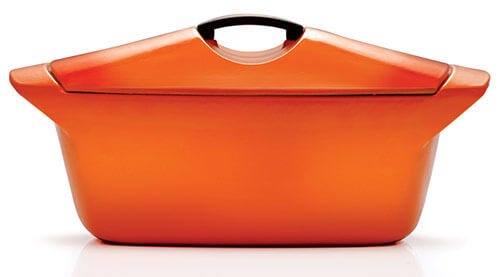
When working with La Creuset, he didn’t recreate the Dutch oven, he gave it a futuristic appeal that felt new.
When working with Lucky Strike, we didn’t redesign the logo, he gave the colors more of a contract that felt bold.

Loewy called his design philosophy MAYA - Most Advanced Yet Acceptable
MAYA allowed him to push the limits to a point of excitement, not confusion. To the point of interest, not oddity.
To a point that was still acceptable to conventional thinking.
As an industrial designer, he sat on the side of the customer. His job wasn’t only to design for function, but also to design for desirability. For marketability.
Loewy understood the balance between our gravity toward the familiar and desire to be challenged.
Which just so happens to be our job in marketing…
-
Make Content Hit
There is no formula for creating something popular that will “go viral.”
Writing a song with the I–V–vi–IV chord structure isn’t going to make me Jason Mraz. Directing a movie about Batman isn’t going to make me Christopher Nolan.
However, understanding the common mechanics behind popular things can shed a little light on how to approach marketing.
Be Fluent
Be Familiar
Be MAYA
Loewy was a master marketer. Let’s look again at what he said:
To sell something surprising, make it familiar;
If your products are not something people have seen before, make everything else familiar.
Katie, the founder of Trail Magik, was on the podcast a while back. She makes an innovative kid carrier for hikers.
She has an Instagram video that shows her on a trail, in her gear, with her kid… all of that is familiar to her customers and easy to process.
So when she pulls out her kid carrier, it adds just 1 new element. Everything else is familiar.
If she replaced that with a high-production video, with cool angles and perfect lighting, everything would be sterile. It would be out of place.

and to sell something familiar, make it surprising
If you don’t live under a rock, you probably have seen the video from Chipotle.
We’ve all been to Chipotle for their big ‘ol burritos. We know the menu. We know what the store looks like. We know the process of going through and choosing our ingredients.
There is literally nothing you can tell me about Chipotle to surprise me.
And then…

Surprise! They have corn. Which I knew. But still, I want a burrito now…
-
The Point Is…
We humans are predictable, but not robotic. We like things that are authentic and within the realm of possibility… with a touch of surprise. It keeps us on our toes, just like a plot twist or key change.
We should approach content the same way.
When a shopper visits your website or signs up for email, don’t shove a coupon code down their throat.
That is soo 2020.
Customers came to your ecommerce store because they are interested in your products. So get in their head and figure out what they are thinking…
Confirm that you understand them (fluency)
Reinforce why they are there (familiar)
Then add something new they might not expect (MAYA)
And most importantly, your content must also be intentional.
That’s what how your hits helps you sell.
You don’t need to write a new Lullaby or Baby Shark Dance, but you can create content that your audience doesn’t ignore.
Originally sent as an email — view on Substack.
Get the next one by email
New issues go out as they are written. No schedule, no filler.