
Customer Psychology in Ecommerce
and how to use it to build out your Customer Strategy.
November 12, 2022
US businesses spent 1.4 trillion on marketing last year. 300 million went to advertising. That means over a trillion dollars went to all other aspects of marketing - agencies, content creation, websites, apps, email, partnerships, copywriting, etc…
And most marketing is done on a hunch. Based on opinions. Guesswork that pans out or doesn’t. With 1.1 trillion dollars to support those hunches.
Imagine what 1.1 trillion dollars could do if marketing was based on discernable and repeatable mechanisms that have been studied and tested?
That is why customer psychology is needed.
This article as an overview of customer psychology, and I hope it spurs ideas and innovations for your business.
Blind Reliance
I like commerce tech. The apps and automations help us get things done faster. Organize our day. Execute mundane processes with efficiency. But they can’t think for us. They can’t make decisions or give you direction. That’s on us humans to do.
But we blindly rely on tech way too much… and to our detriment.
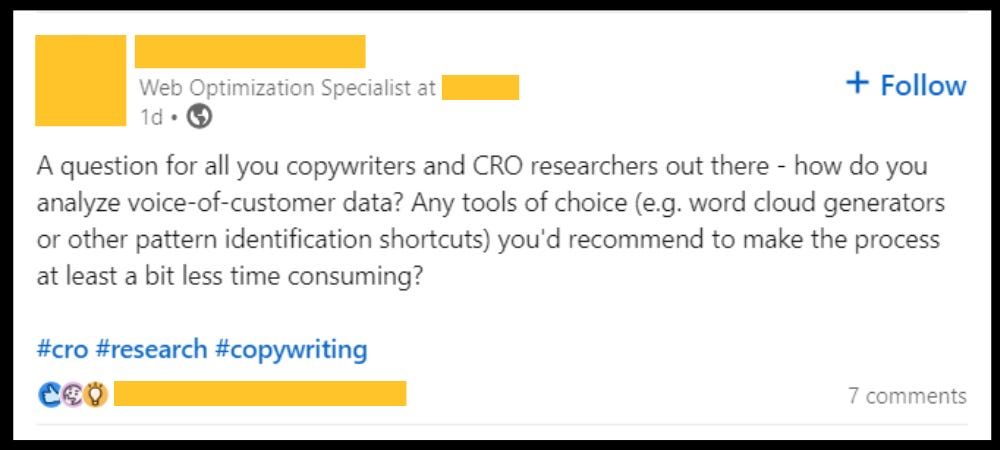
This post came across my feed yesterday. Some optimization specialist wanted to automate the literal only part of his job that touches humans. As if a word cloud generator will help you understand the voice of the customer.
Business is fast-paced, but not fast enough that we can’t stop and smell the customer. I’d venture to guess that if that CRO bro spent 30 minutes reading into the feedback (or reviews or whatever he had), he would sense the nuance and emotion… and would save more than 30 minutes running random a/b tests that are less-than-significant.
Reading between the lines is the whole point of voice-of-customer analysis. People are complex and make decision based on multiple factors. Understanding the who, the how, and the why is what we need in business to make decisions and give find direction.
It cannot be automated.

Our reliance on tech has blinded us to what is important. Our need for speed stops us from seeing opportunities…. as well as the warning signs.
I have been in marketing and management for years, but consistently I find that brands lean towards the quick and easy instead of the deep and enduring. It is not sustainable.
I hope to affect change by helping businesses see things from the perspective of their customers. That way they have stable, healthy growth, even when things are uneasy.
So for this writing, I want to talk about:
What is Customer Psychology
Why We Need It
How to Apply It to Your Business
What is Customer Psychology?
Customer psychology dives into people’s decision-making process. The social and media influences. The motivation behind why shoppers buy some things but not others.
If you want to boil it down to a sound byte, it is why people buy.
Now to be clear, this is not the same as consumer psychology.
Consumer psychology addresses populations and their shopping and purchasing behaviors. It tracks macro trends and anomalies in order to predict shifts that will affect the economy as a whole.
Customer psychology addresses individual customers and their shopping and purchasing behavior. It tracks decision-making processes and shopping habits, and looks at the influences on those behaviors.
My purpose in using customer psychology is improve marketing and business operations, not in “market research.” So when I approach it, it is to apply insights to strategy by understanding:
Business Economics
Product Class
Customer Life Journey
Marketing Execution
There are amazing people who do pure research in psychology and behavioral economics ( …will have some on the podcast soon ) which form the basis of customer psychology
But for our purposes here, we will stick to the business side of things…
Why Do We Need It?
This week 10s of 1000s layoffs took place in the tech world. That’s why…
Business has been booming for a long time. Growth spurred on by venture capital who needed somewhere to place their bets. But things became unstable. Inflation rose and the talk of recession tickled their ears. So they told founders to tighten things up.
But wait… this is tech, not ecommerce?
Yes, but we are looking at psychology, and this is a prime example.
The CEOs who run companies are not superheroes. They are not especially great on their own either. When ecommerce and tech were running hot during the pandemic, they were confident. Things were going to continue on this new trajectory.
The tech giants looked at the numbers, not the people.
During that time, I was running the marketing with a few ecommerce brands. The founders there also thought things would continue on this new trajectory.
Business owners looked at the numbers, not the people.
But things did change. People slowed down. They slowed down on “retail therapy.” They started traveling and dining out. They keep on spending. On different things. Trajectory be damned.
Customer never look at the numbers, they are the numbers.
Shopify - Red Fin - Meta - Salesforce - Stripe - Klarna - Loom on the tech side… and Peloton - Gap - Amazon - Wayfair on the ecommerce side. And so many more.
These companies, with their visionary CEOs, got it wrong. They looked at the numbers, not the people. Despite going through an unprecedented period of history, they just guessed that they newly minted success was the new normal.
Confidence is a helluva drug.
I know that sounds a bit doomy and gloomy…but that is why it is important to remember.
No matter how successful the company, it is completely propped up by its customers. Without them (the real heroes), companies cease to be relevant.
So we best get to know them.
On the bright side. Glass half overflowing. Customer psychology is more about opportunity and innovation and less about the end of the world.
So let’s dive into that…
I got a call from a company. They were having a wee bit of a problem…. the conversion rate on a new product line they launched was a wee bit wee...

Everything else in their business was good as ever. Products in other categories were killing it. But not this new one.
I asked the owner if he or anyone had talked to the customers who bought these products. He said no…
What!?
An 8-figure company, massive new product launch, and their team had never once talked to a customer outside of a customer service ticket.
The products themselves were great. The people in the company knew it. They figured customers would see it too. That these products should sell like hotcakes.
But crickets…
I think the conversion rate was just over .2% in case you were wondering. The price point over 500. They were losing money on each sale due to the cost of advertising.
Not knowing these customers and why they buy cost them a ton…
Not a fun position to be in.
Now, before we get to the practical application, I want to dispel some pre-conceived notions you may have…
What It Isn’t
This snippet comes from Verywell Mind:
For example, using a survey might allow researchers to discover that women between the ages of 30 and 45 who have a household income between $50,000 to $100,000 are most likely to buy a particular product or service. By knowing this, they can then begin designing marketing campaigns aimed at this target audience.
This was the example they give on how to use psychology in marketing. Which is awful. There is no psychology here. There is info you’d gather in 5 mins on Google Analytics or a shoddy survey with an app.
Ugh…
And at the very mention of psychology, you probably picture a thick-rimmed glass-wearing, clipboards-holding market researcher asking…and why?

That is not Customer Psychology.
But psychology is an -ology, so people assume it only means research and reports. That side of it does exist, but it is useless to business, especially ecommerce.
This might be an unpopular opinion to some, but it is the truth. When the person doing “research” does not have experience in marketing operations, the resulting report will not give you the insight and inspiration you need.
Simple as that. If you are going to do something, gotta get it right the first time.
Let’s see what that looks like…
Bring Customer Psychology to Your Business
If you plan to apply customer psychology to your business, there are 4 things you need to understand first:
Business Economics
Product Class
Customer Life Journey
How Make it work for you
So let’s start at the top of the list…
Business Economics
This is the point in the conversation where I get to act smart and throw around acronyms…
*takes a deep breath*
We’ve got the CAC and LTV, your AOV from the CTR of your CPC on your PPC but also a BR, and so you should hire an SEO for your SERP and CRO for your CR.
You can find all of this in your CMS…
In all seriousness though, the numbers behind the ABCs is where we start, particularly with:
Unit Economics
Customer Acquisition Cost (CAC)
Retention Rate
You savvy ecommerce people will noticed that I didn’t use LTV on #3. That is because measuring the lifetime value of customer is antithesis to the concept of customer psychology. But retention is important nonetheless…
Unit Economics
This is your cost of goods, how much you mark them up, and the profit margin. These numbers are essential for both:
Pricing Strategy
Promotion Strategy
Pricing strategy is kind of where a business starts. It is super easy to slip up and price it things too low. That is because brands are in competition with the Amazons and Walmarts who have the ability to make things unnervingly cheap.
But if you slip up and margins are too tight, any sales and discounts and returns will kill your profit, and will tie you hands in marketing... double plus ungood.
CAC and Retention
Your Customer Acquisition Cost, aka your marketing budget, is where customer psychology will have the greatest impact.
The thing is that for years marketers pumped money into Facebook and Google Ads and got customers for relatively cheap. Brands relied on cheap digital ads. Now that they are not cheap, brands are shitting themselves.
Well, not themselves, but all over their websites with gimmicky apps in an attempt to increase conversions.
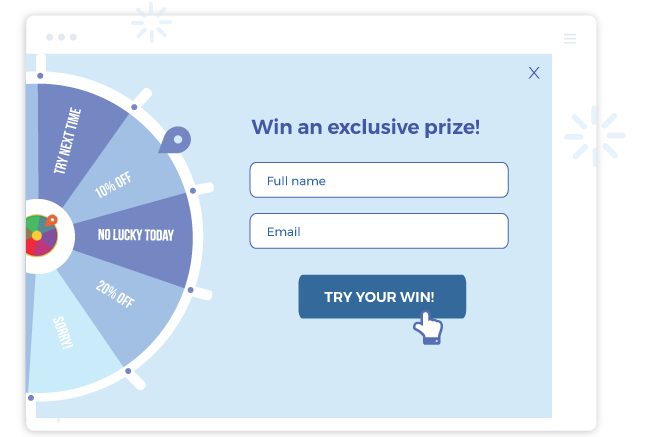
The Popups, Spin thingy, FOMO, Someone from Kansas City, OH just purchased a pair pasta rollers… $99 $19, Deal expires in 5 hours 42 minutes and 31 seconds.
These nuggets of joy have been on their way out for a while. However, I wanted to point out that these tactics were where our collective marketing minds went when things got competitive.
Instead of calling our customers to learn about what they need and how our product fits into their life journey… brands bunged up their websites with tactless attempts to nudge people to checkout.
The brands that continue to excel, even as marketing costs increase, are the ones that understand their customers. They can capitalize on opportunities instead of trying to claw back what used to work.
They are able to keep costs lower than their competitors which gives them leeway to try new things.
Product Class
Not all products are created equal but some are more equal that others.
But I promise to make this make sense…
There are classes of products, and they each have their place in our shopping habits:
Cheap goods (incl. commodities)
Middle Class goods
Luxury goods
Our behaviors towards each class of product is different. Which is why strategies that work for CPG doesn’t mean much to a brand of high end leather satchels.
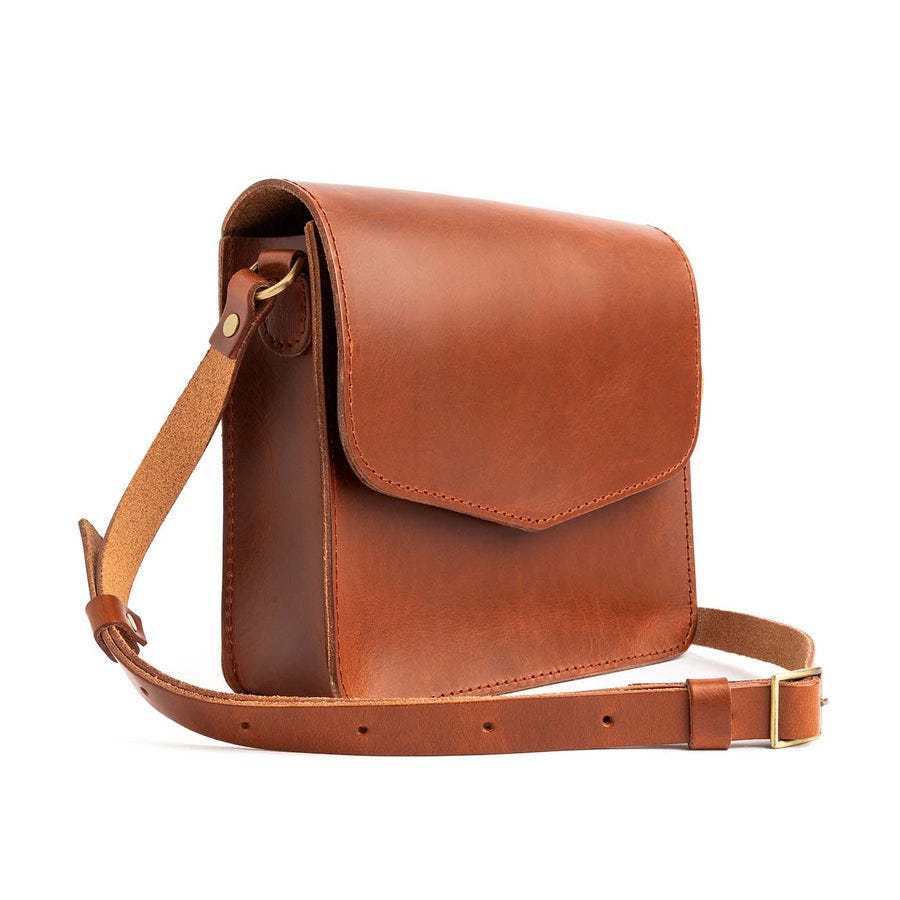
Cheap Goods and Luxury Goods
Yes, that is correct. I put these together. Not because it is 10:53 at night and want to stop writing, but because the psychology is basically the same… just inverted.
With these two classes it is all about pricing and perceived value.
Bargains hunters want the bargain. It makes them feel good and will brag about it to their friends.
Luxury shoppers want the status. It makes them feel superior so they don’t even have to brag about it to their friends.
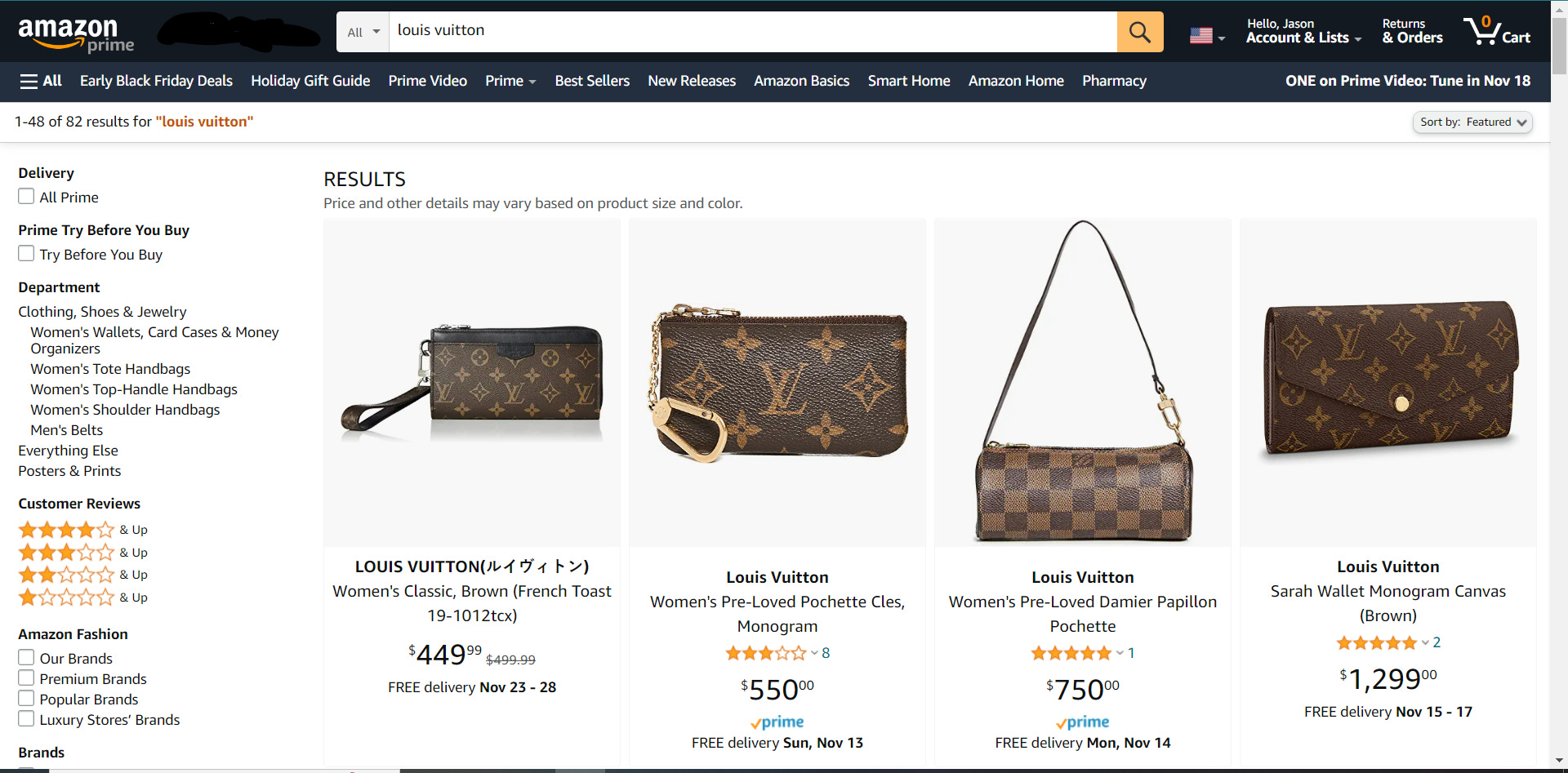
When we cheap items or commodities, we still want value. We still want quality. We just don’t care about the brand. They are all the same in our eyes… hence why we go to Amazon or Walmart or Target. Because we can easily choose based on price…
The brand is not important. A lower price or a bigger bundle is what drives behavior.
The customer who buys luxury goods wants to be in the in-crowd. They are not weighing the price against the quality or value or function. They want what others around them deem cool. They don’t need the product for use. Just for show.
Outside factors are playing on these decisions.
Middle Class Goods
When your products fall into this category, customer psychology is important. People are actively psychologizing over which product to choose, and it is extremely complex.
Lots of influences come into play:
Psychological Factors
Environmental Factors
Personal Preferences
Cultural Factors
Social Factors
Economic Factors
Some or all of these will go into making a decision. Because middle class products are for the most part non-essential goods. People don’t have to have them. They are good to have, but people will get by just fine if they don’t have it.
On the podcast last week, I used the example of a beach towel. You can get one on Amazon for $6.99 if you really need it. But Brooklinen has a nice one for $75.
Now, if I am Brooklinen, I am not competing with Amazon (or with Gucci’s $1050 towel for that matter), but I am competing with a lot of other bougie beach towel makers.
Sometime around 2015 after Warby Parker established DTC as the new road for brand building, tons of brands in this middle range emerged. Founders did not want to commoditize their brands in a race to the bottom on Amazon, nor did they want to enter the luxury market.
They wanted to bring their ideas and product to life where most consumers lie… right there in the middle!
This class of goods now exist that rely heavily on marketing because, again, a $75 beach towel is not essential to anyone.
It is like the space race in the middle of last century, only with 4000 players instead of 2. Everyone is developing their marketing chops and getting better with design, social, content, etc…
They are going to conferences and talking about creating funnels and ToFu, MoFu, and BoFu. Retention strategies and automations and touchpoints. On and on, and yet…
Customers are not paying attention to any of it. They are just doing their thang and picking out something when they decide to pick out something.
As much as we imagine them as figurines in a “customer journey” board game, hopscotching it from one stage to the next… they are not even playing. They are on their own life journey.
…and brands must learn that. That they are actually part of their journey.
It’s Their Journey
The first step to applying customer psychology to your business is to accept the fact that our idea of The Customer Journey is a pipedream.
Marketers like to categorize things. Keep things organized and in linear order. It gives them a sense of control, and a straight-forward idea of the steps that need to be taken.
In that sense, this makes sense:
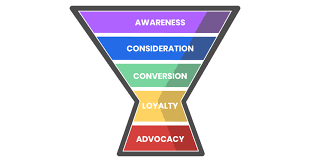
The idea is that decision making process follows these steps.
First, I am aware that I need some coffee beans
Second, I consider which coffee bean brand matches my needs or preference
Third, I decide which one to buy.
Fourth, Obviously, I love it. I will make money purchases on a 30-45 day cycle
Fifth, I tell all of my friends and #JoeMyGodItsSoGood on Instagram about this magical bag of beans.
Because I followed the steps in order, you the marketer can pat yourself on the back. Attribution is accurate. Calculate my Customer Lifetime Value, and then I free to wander off into the sunset.
The purpose of customer journey mapping is to break down our behaviors in such a way that we can create a logical, actionable content strategy:
Ads for reach and exposure
Content to engage and inform
Retargeting to keep top-of-mind
Email flows
And so on and so forth… Your team has their marching orders, and everyone can get to work.
If this works so well, why do brands struggle with marketing?
As I talked about in a previous post, there is a school of thought in economics that assumes man as Home Economicus, which is to say that people always make decisions that are logical and in their best interests with the information that they have.
Totally bogus. People jump around a lot when buying things.
They might decide they want something now, and buy that day. They might (from real customer interviews) follow a brand on Instagram for over a year before buying, or buy because the look made reminded them of their youth, or have 10-12 tabs open to buy pants before asking their boyfriend which one he liked…
There is a lot going on in our minds…
Emotions, preferences, past experiences, culture, environment, our core affect, and social influences all play into our decision-making process.
The light at the end of the funnel
Your customers are unique…ish.
Besides Amazon, no company attracts all types of people. I guarantee your customers share some characteristics, are attracted be similar things, found you in similar ways, and have a specific reason they chose your products.
Knowing where your brand intersects with your customers, and seeing your brand from the customer’s perspective, changes everything.
Things become clear. There is a light at the end of the tunnel.
Customer Psychology flips the script.
Make it work for you
This newsletter will cover the underlying mechanisms that influence customer’s purchase decisions. It is a good place to start.
But when you’re ready, you’ll want to start talking to you customers.
Have a qualitative conversation, not a survey…
This is the where customer psychology deviates from “market research".
A qualitative conversation is not a survey or questionnaire. When people take surveys or answer direct questions there goal is to answer the questions. They just want to get to the end regardless if what they say is useful… or accurate.
It is not that they don’t want to be unhelpful, it’s just that in an I-ask-you-answer setting, they want to get to the end of the questions instead of having an open conversation.
In a qualitative conversation, you talk freely with your customer, but you keep in mind things that you want to gain from what they say.
What event made them look for your product
Where did they start looking
What factors were they looking for, and which were the most important
Why did they choose your product
Et cetera…
You want to talk your brand and products unfiltered. Let them talk and give them time to remember things about their experience.
People are genuinely open to talk with brand owners. They respect the fact that you care enough about them to sit down and talk. They will be an open book.
No apps or automations. No word clouds. Just two people having a conversation.
Customer Psychology in Action
Today most ecommerce marketing resembles a rote activity for brands. Strategies all look the same. Every marketer declares don’t follow best practices! but then just does the same old thing anyway:
Choose marketing channels
Task lists, templates
Focus on the numbers
It’s not that bad actually. It is a starting point. It gets your marketing channels established and teams brushed up on software and apps you need for it.
But it lacks the oomph to keep a brand at play. You will always need new creatives, optimization, a way to stand out.
Stay Inspired
Bringing your customers into the mix, and listening to them will never disappoint. You will have endless ideas for creatives and campaigns.
I like to think of it as a “mini-documentary of your customer’s journey” to inspire your marketing. Because the worst thing to see in a team is a loss of ideas. It leads to googling competitors and hijacking ideas that don’t fit your brand
And who better for the job of inspiration than the people you hope to reach!
Customer Strategy in 2023
People are changing their habits around how they spend money. Platforms that require high sales volume of low quality products will hurt as customers shift to experiential purchases and products built to last.
The brands in the middle that make great products and give great service are the economy. There is huge opportunity for growth in 2023.
Customer Strategy is the act of using customer psychology to align your marketing, brand, and product with your customers.
At my consulting agency, we deconstruct your brand and marketing to address your individual customers and their shopping behaviors. Through identifying their decision-making processes and the influences on those processes, we build back up a Customer Strategy to grow your brand and beat your competitors.
- Jason
Good Reads…
Price Anchoring & How it Affects Purchase Decisions
Ads are simple… Simple is hard
Did I Mention To Not Be Simple?
Paradox of Choice (paid)
Originally sent as an email — view on Substack.
Get the next one by email
New issues go out as they are written. No schedule, no filler.